Stronghold Castle, Oregon, Illinois

DSC_3512

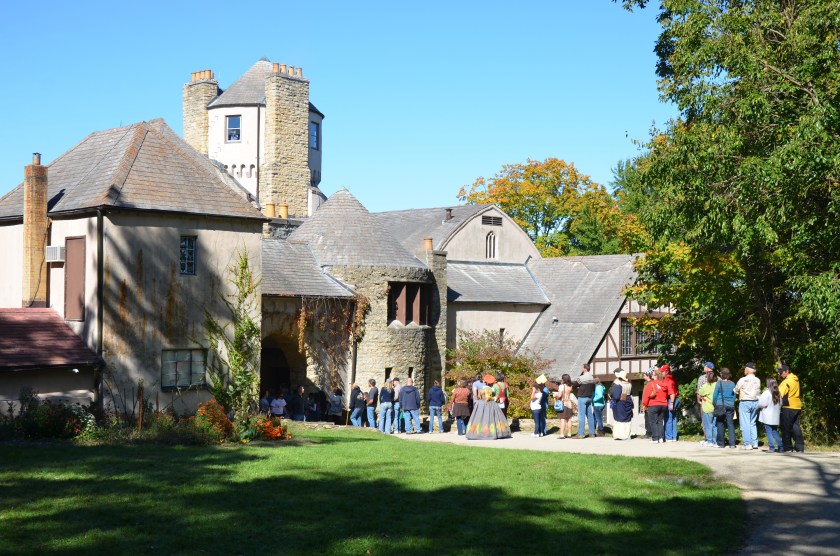
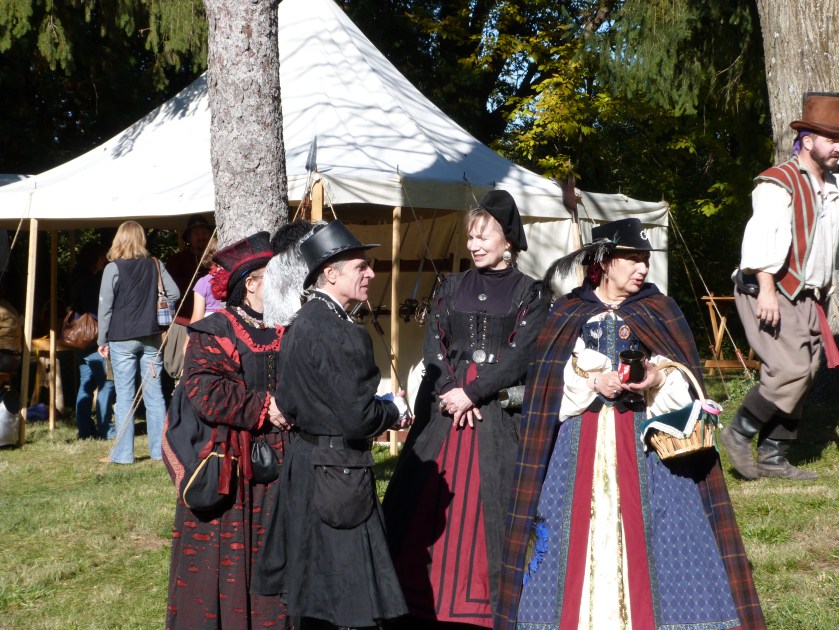
Don’t have time for a trip across the pond to Merry Ole England?  Then have a Midwestern British experience by visiting Stronghold Castle in Oregon, Illinois.  They host a two-day English Faire every year in October.

DSC_3499

Stronghold Castle was completed in 1930 for Walter Strong, owner of the Chicago Daily News. He built the house as a summer get-away for himself and his family.  They enjoyed it for thirty years before it was sold to the Presbyterian Church, which now uses the property as a conference center and retreat.

DSC_3546editDSC_3518

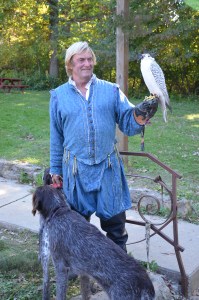
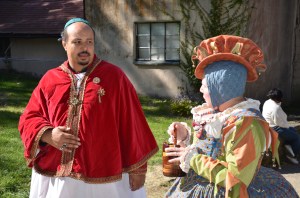
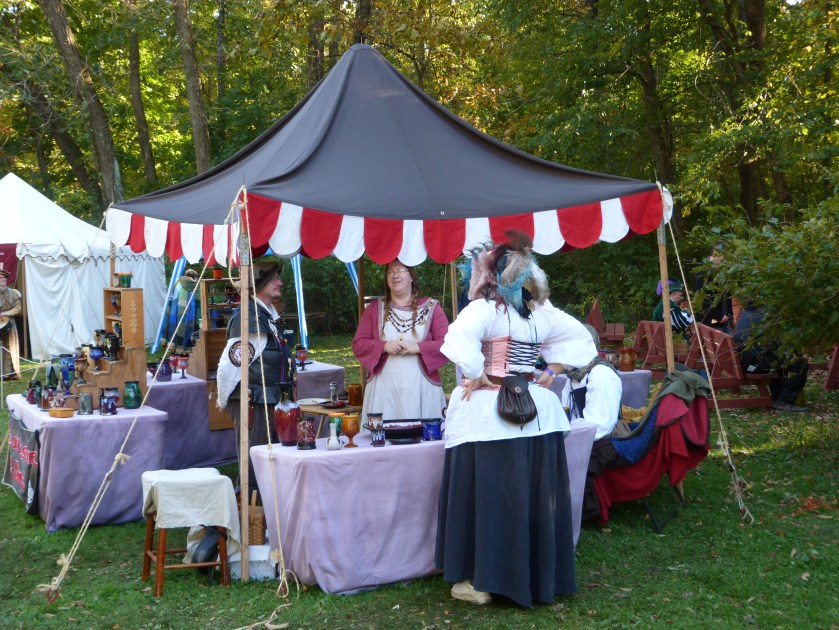
The Old English Faire takes place on the Stronghold grounds.  There’s entertainment, music, food, and a merchant’s bazaar.  This year, 2016, the Faire is October 1st and 2nd.

DSC_3567

p1000137

p1000153

The merchants’ booths offer interesting wares, and you’ll have opportunities for some great photos as you stroll the area.


dsc_3550editp1000149

p1000135

p1000143edit

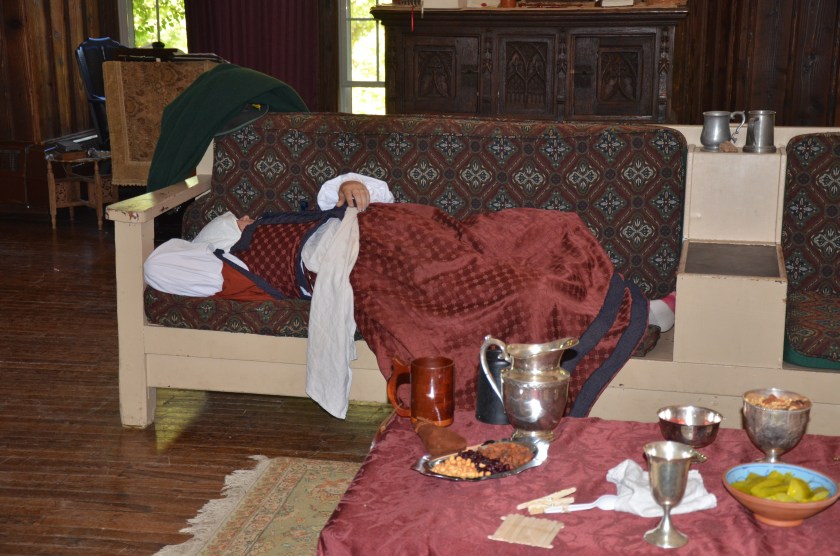
The castle is open for tours during that weekend, too.  You never know what you’ll see!

DSC_3532

DSC_3534

The Stronghold English Faire is a unique fall event held in a beautiful setting.  Plan to attend, and you and your family will have many lasting memories.

Bonus stop: Eternal Indian

P1000163edit

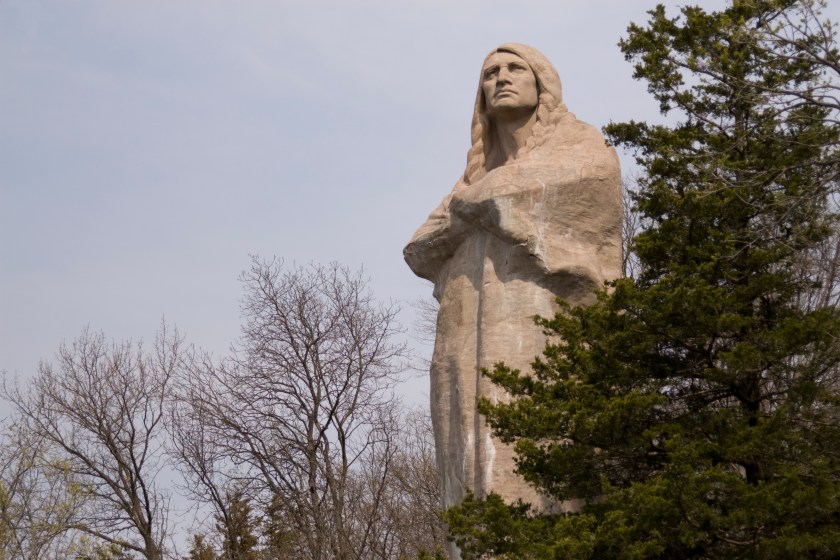
Keeping watch over the Rock River is Lorado Taft’s Eternal Indian, also known as Blackhawk Statue.  It’s not far from Stronghold Castle.

IMG_9301

The statue was completed in 1911 and dedicated to all Native Americans.  It’s made of concrete and stands 48 feet tall.

Lorado Taft studied art at the University of Illinois and later in Paris.  He became a well-known sculptor and received many commissions.  He also taught at the University of Chicago where he had a studio in the area.   Although there is a long list of Taft’s work on display in Illinois, his art can be seen as far away as Seattle and Washington, D.C.

Grand Detour, Illinois

Grand Detour, Illinois is proof that good things come in small packages.  It’s a picturesque little village located on the Rock River, in the northwest part of the state.  Indian legend says that the river found the land so beautiful that it turned around for a second look, thus creating the bend in the river for which Grand Detour is named.

DSC_3295 edit

It’s best known as the place where the John Deere company got its start.  Mr. Deere was running from bankruptcy in his native state of Vermont when he arrived in Grand Detour in 1836.  He was skilled as a blacksmith and quickly found work shoeing horses and oxen, and making farm implements like pitchforks and shovels.

Farmers kept telling Deere that the rich Midwestern soil stuck to their plows, and they were forced to stop every few feet to scrape off the moldboard.  Deere invented a highly polished plow that cut through the sticky prairie soil and let it fall cleanly away.

P1000084

Word soon spread of this new plow, and the business grew rapidly.  In 1848, Deere moved his operations from Grand Detour to Moline, Illinois.  Moline is located on the Mississippi River and offered better shipping and water power.  Deere & Company’s world headquarters is still there today.

The John Deere Historic Site in Grand Detour has preserved the early Deere heritage with an interesting pioneer village that you can tour.  It reminds me of a mini-Colonial Williamsburg.  The Deere corporation financially supports the site, so it’s well maintained and thoughtfully interpreted.

DSC_6584
John Deere Home

The grounds include John Deere’s 1836 home and an archeological exhibit showing where the original blacksmith shop was located.

DSC_3307

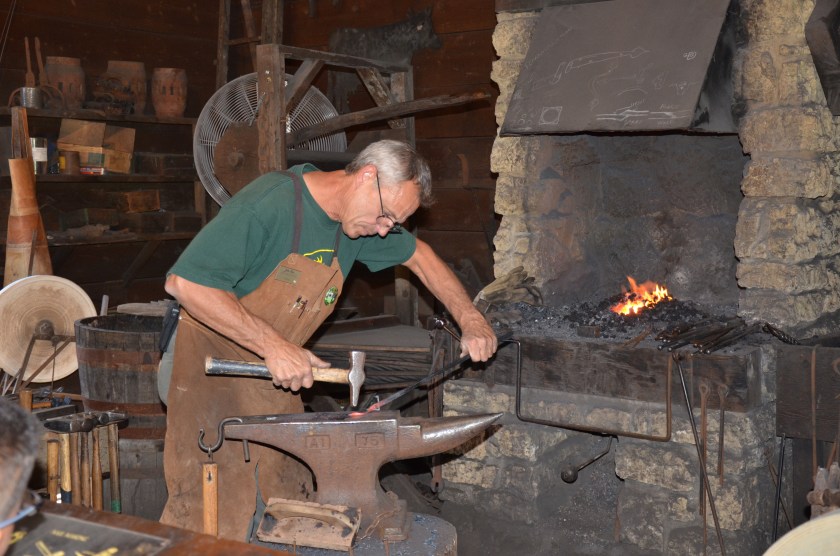
You can also visit a replica of a pioneer blacksmith’s shop and see how Deere worked back in the day.

DSC_3345

There’s a good display of plows just outside the blacksmith shop. (Although most people today associate Deere & Company with tractors, John Deere himself is known for the plow.  He died years before the company entered the tractor market.)

IMG_1041IMG_1042

Every fall the John Deere site hosts the Grand Detour Arts Festival.  This is the 68th year for the event, and you’ll want to mark your calendar for Sunday, September 11th, 2016 from 9 a.m. to 4:00 p.m.  It features artists’ booths, music and food, along with a chance to see the historic site.

DSC_8969edit

Just a few blocks north is the lovely St. Peter’s Church, built in 1847 with locally quarried limestone.  It was originally an Episcopal church but today is non-denominational and a popular location for weddings.

DSC_8965

And you’ll find some other historic properties if you take a drive around the village.

DSC_8973editDSC_8975editDSC_8984edit

DSC_8974

Grand Detour – it’s inspiring to think that from this charming little village, John Deere founded a business that is currently the largest agricultural machinery company in the world.  You’ll enjoy seeing its humble beginnings.

Burlington, Iowa

River towns have always had a certain appeal to me.  Their history can be as deep and complex as the water they sit on.  So I decided to take a look at Burlington, Iowa, located on the mighty Mississippi.

DSC_3921edit

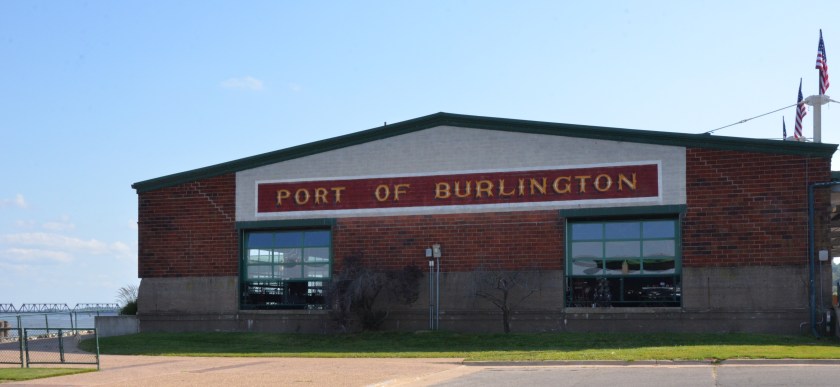
Like many towns in the Midwest, Burlington is named for somewhere in the eastern United States.  (Burlington, Vermont, in this case.)  The Iowa Burlington has a background of fur trading, steamboats, railroads, and manufacturing, all of which have left their mark on the city.

DSC_3931

River towns often have an iconic bridge that makes it to the postcards.  In Burlington, it’s the Great River Bridge.  I like the easy-to-remember name.

DSC_3939

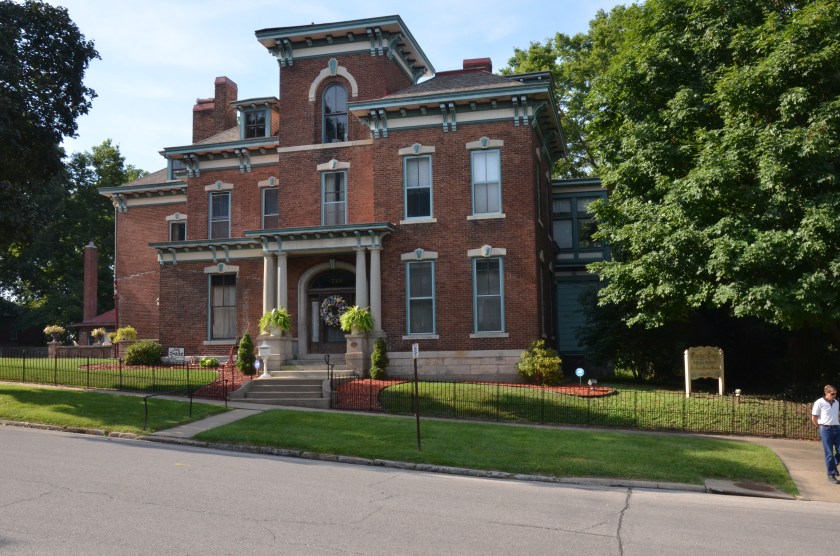
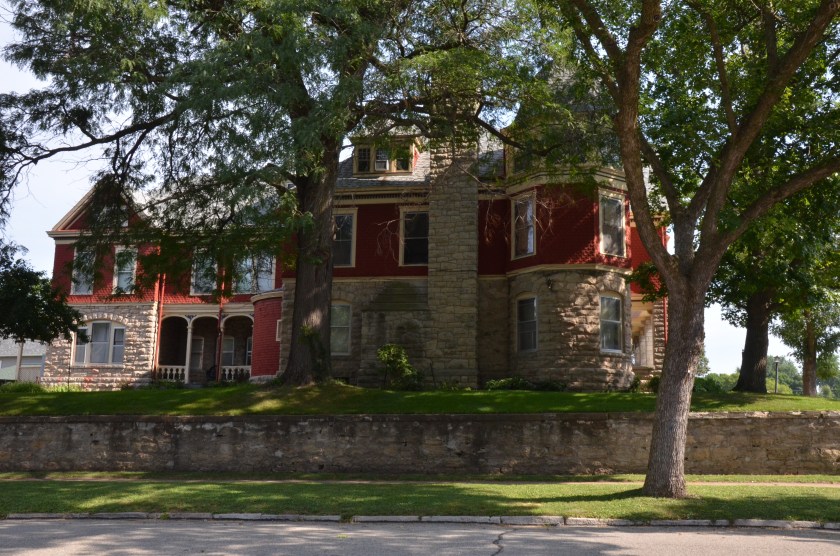
After crossing the bridge to enter town, we headed up to the Heritage Hill neighborhood and found enormous homes.

DSC_3985

They were built by successful river barons and other merchants.  There’s a variety of architectural styles to appreciate with these mansions, or you can just group them altogether in my husband’s simplified category of “big-ass houses.”  Either way, a walk around this historic district will leave you impressed.

IMG_0078

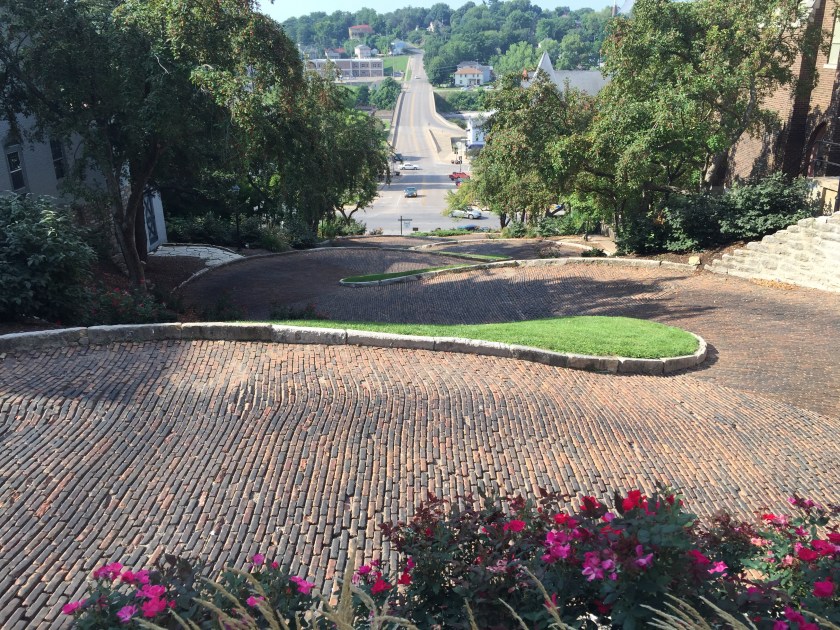
While you’re in the Heritage Hill area, be sure to drive down Snake Alley.  It will remind you of Lombard Street in San Francisco.  Snake Alley was built in 1898 to connect the hilltop area with the downtown shopping district.  Three clever German immigrants came up with the idea to make a winding street down the steep elevation, something they learned in the Old Country.  Bricks were laid at a slight angle so horses could get a better footing as they went down the alley.  Today it’s one-way from top to bottom so don’t attempt to drive up it.

IMG_0049
Big Muddy’s

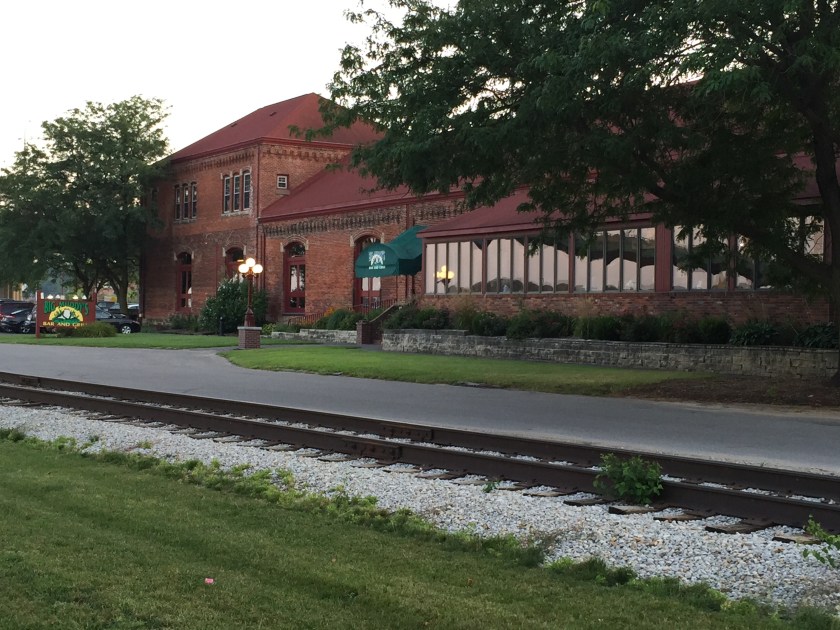
For lunch or dinner, try Big Muddy’s Bar & Grill on the Mississippi River.  It’s located in a former nineteenth-century freight house that’s listed on the National Register of Historic Places. The views while you’re dining are beautiful.  Inside, there are two markers on the wall to indicate the level of flood waters in 1993 and 2008.  For their efforts at restoration after these disasters, Big Muddy’s received a community award.

Burlington, Iowa:  A Great Place to Live, Work and Play  . . . .  take a look and see for yourself!


Ellwood House Museum, DeKalb, Illinois

The Ellwood House is a very special place to me, having been born and raised in DeKalb County, Illinois.  For many years, the Ellwood House volunteers sponsored an annual Tour of Homes as a museum benefit.  My mom and I, along with assorted friends and family, went on that tour every fall.  We always saved the Ellwood mansion as the last house of the day, each of us looking forward to seeing our favorite room again. (Mine was the dining room.)

DSC_6228b

This time the outing was Cruzn with girlfriends, Missy and Cecille.  It was their first visit to the Ellwood estate.

To begin, why is Isaac Ellwood notable? . . .  we found out that he was one of the first to manufacture barbed wire, which was important in the settlement of the American West.  Barbed wire allowed ranchers to economically fence in their land and keep track of their large herds of cattle.

Glidden Barb Wire

Ellwood and his business partner, Joseph Glidden, formed a manufacturing company and shipped boxcars of barbed wire to the Plains.  They both became very wealthy men.


IMG_1547

Isaac and wife, Harriet, built a fine house with all that barbed wire money.  Over the years, the 1879 mansion was updated a couple of times to its present look.  Family members donated the property to the DeKalb Park District in 1964.

DSC_6232

Also located on the grounds is the charming Little House.  It was built in 1891 as a contractor’s model and parade float.  The Ellwood’s eldest son, William, later purchased it for a playhouse for his two daughters.

DSC_4042

Another interesting building is Mrs. Ellwood’s private museum.  She collected so much stuff on her world travels that her exasperated husband finally had a building constructed to house it all.  Today, Mrs. Ellwood’s “curiosities” are displayed in the Visitor Center, and her museum building is used for storage.
DSC_6234


This stone water tower was once part of “Ellwood Green,” the family’s business of importing and raising Percheron draft horses.  (The Ellwood property around the mansion was about 1200 acres at one time.  A large stable complex, including the tower, was part of the acreage.)


The Ellwoods had seven kids – five reached adulthood – and they all lived in grand style, too.
IMG_1164b

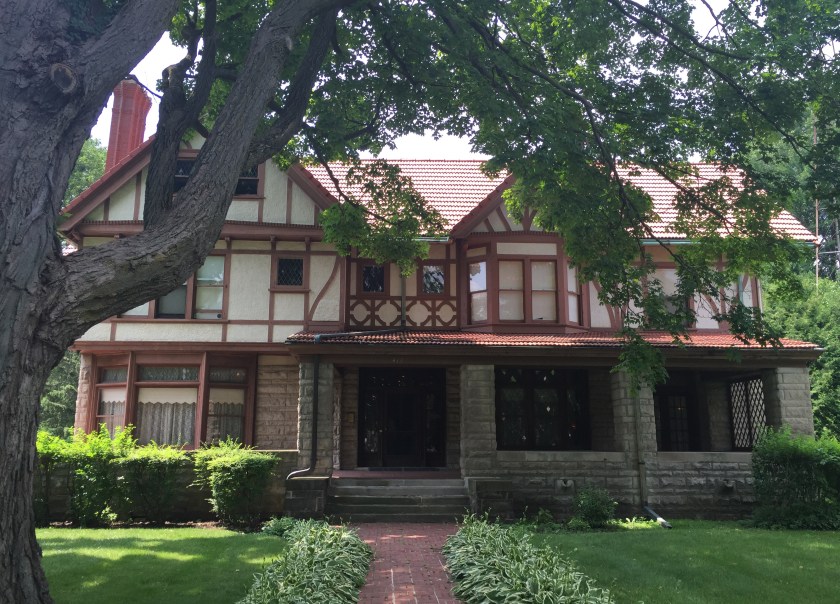
Next door to the Ellwood mansion is the Ellwood-Nearhing House.  It was built for youngest son, Perry, and his wife, May.  A later owner, Mrs. Shirley Neahring, donated the property back to the Ellwood Association in 2011.  You can now take a tour of this home as well.

DSC_4048


Out on the lawn, Archduke Ferdinand, minus his sword, watches over the grounds.
IMG_1179

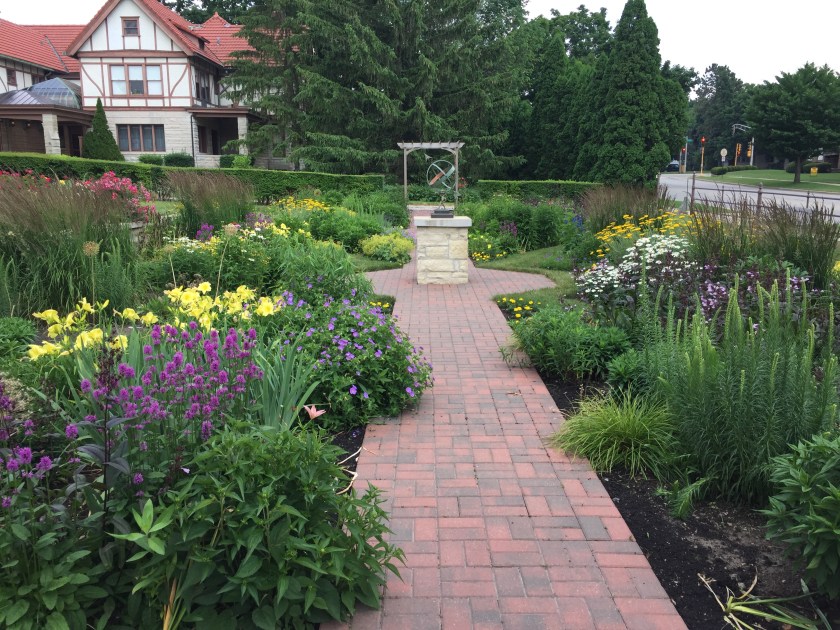
The garden behind the Ellwood-Nearhing House is lovely.  It is based on photographs of May Ellwood’s 1903 garden, and planted in the same location.
 

IMG_1600

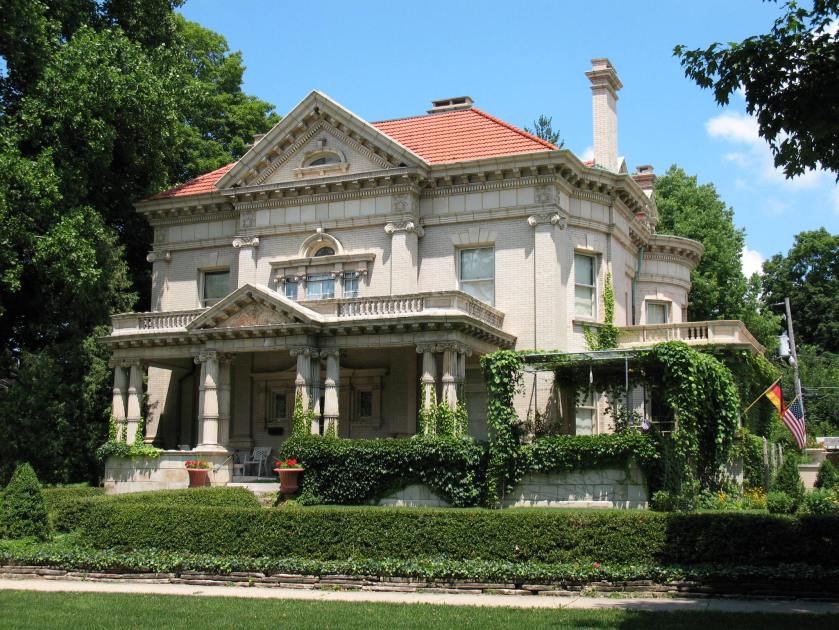
Daughter Mary and her husband, John Lewis, lived a few blocks away from the Ellwood mansion. The Lewis family moved into their new home in December 1900.

IMG_1559

The home of another daughter, Harriet, was just down the street at 105 North First.  She married a local physician.

IMG_1521


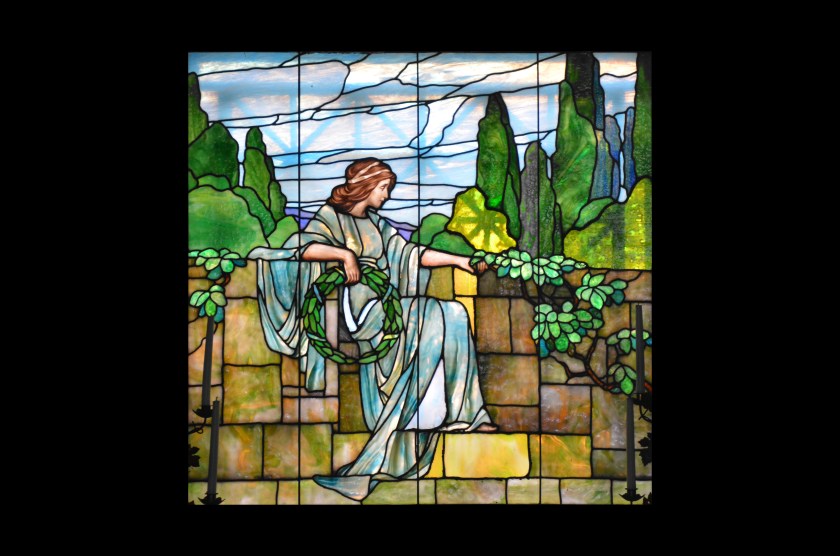
To complete your study of the Ellwood family, visit Fairview Cemetery at the south end of DeKalb.  Peek inside the Ellwood mausoleum, and you’ll see a beautiful stained glass window, thought to be a Tiffany.
Ellwood Tiffany Window

The Ellwood House Museum shares a great American success story and is well worth a visit!

Ellwood House Museum
509 North First Street
DeKalb, Illinois
http://www.ellwoodhouse.org


Bonus stop:  Egyptian Theater

IMG_5663

Just a few blocks from the Ellwood House is the Egyptian Theater, a former vaudeville hall and movie house, and now a regional arts center.  It originally opened in December 1929.  The architecture was inspired by a national fascination with ancient Egypt after the discovery of King Tut’s tomb in 1922.  There were over 100 Egyptian-style theaters built in the U.S. in the early 1900s, but this DeKalb theater is one of only five remaining today, and it is the only one east of the Rocky Mountains.

Growing up in the DeKalb area, I have many fond memories of watching movies at “the Egyptian.”

Columbus, Indiana

It’s always interesting to see the influence of a leading corporation on the community where it’s located.  In Moline, Illinois, the contributions of John Deere & Company are note-worthy, and in Peoria, Illinois, Caterpillar, Inc.’s name is widely recognized and appreciated.

DSC_2052 b

The major industry in Columbus, Indiana is Cummins Engine Company, and its impact on the city has been significant.  Back in 1950s, J. Irwin Miller was the head of Cummins, and he convinced the town’s leaders to go with modern architecture.  Miller set up a foundation that would pay architect’s fees for public buildings, if a well-known architect was chosen.  The result was a bevy of modern structures.

My husband, Mike, and I took the Columbus Architecture Bus Tour to hear the stories and see the buildings. Our guide was a Cummins engineer who was putting in some volunteer time for the community.  He liked giving the tour and answering questions.

DSC_2060
Bartholomew County Courthouse
DSC_2026
First Christian Church

As we drove around town, we noticed there’s a unique blend of old and new with Columbus’ architecture.  The 1875 Bartholomew County Courthouse looked handsome and impressive, but so did the 1942 First Christian Church, designed by Eliel Saarinen.  We were there on a Saturday, and inside, the church organist was practicing for the next day’s service.  The sound, along with the structure, was glorious.


DSC_2042
Veterans Memorial

Particularly noteworthy among all the modern architecture was the Bartholomew County Veterans Memorial, next to the courthouse.  The names of veterans who gave their lives, along with excerpts from letters and journals, are engraved on the limestone pillars. It’s a meaningful experience to walk among the columns and read the letters.

One of the more popular tours in Columbus is the Miller House and Gardens.  It’s the former home of Cummins chief J. Irvin Miller that was designed Eero Saainen.  The tour sells out quickly so make reservations in advance.

DSC_2081 b

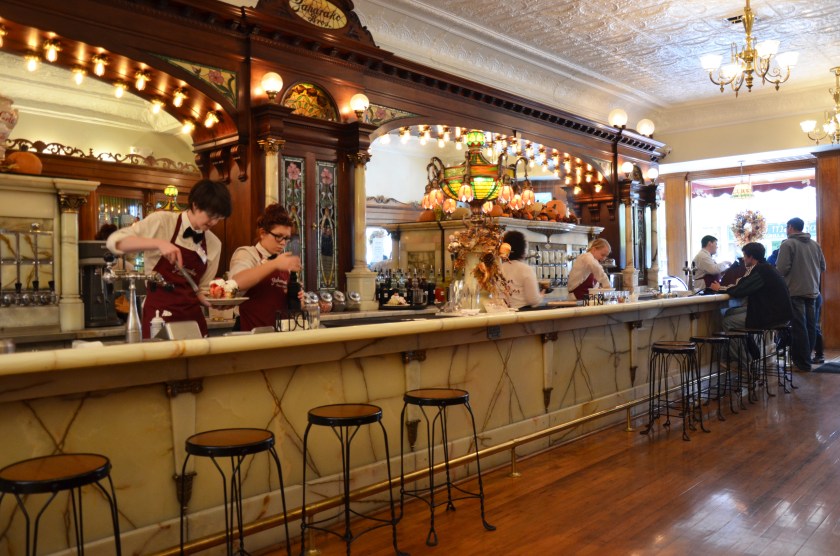
After taking in all that modern architecture, step back in time and enjoy a treat at the restored 1900 Zaharakos Ice Cream Parlor in the downtown area.

DSC_2090 b

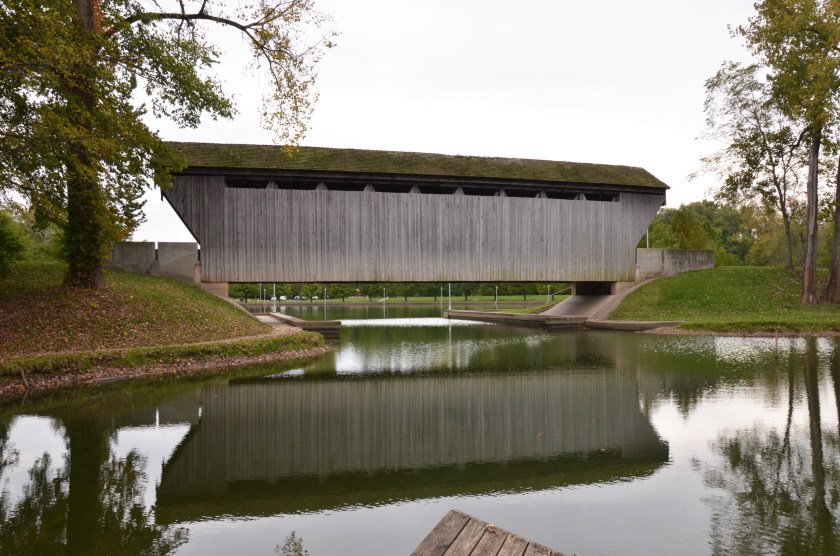
Or take in some nature with a walk or drive around Mill Race Park.  It features an historic covered bridge and a tranquil circular pond.

DSC_2102

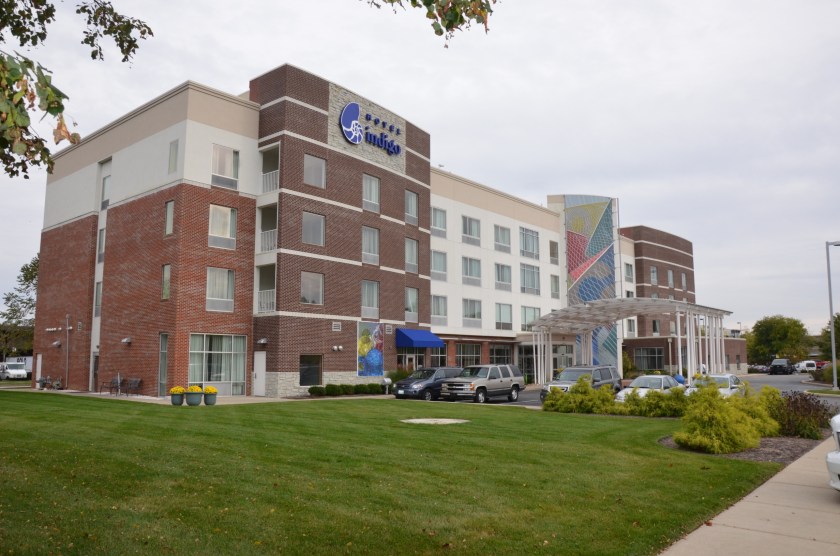
We decided to fully immerse ourselves in the modern architecture experience and booked a room at the Hotel Indigo.  It’s bright, colorful, and doggie-friendly if you’re bringing along the pet.

DSC_2068
Grounds at Inn at Irwin Gardens

If you want a more traditional stay, the Inn at Irwin Gardens is Old World elegant.  The gardens were inspired by Pompeii, Italy.

DSC_2064

Our second day was spent looking over the interesting public art.  There’s quite a bit throughout the city.  At the town library is Henry Moore’s “Large Arch.”
DSC_2013

“Persians” was a gift of J. Irvin Miller and his wife to the Visitors Center.

Whether it’s old or new, there’s something for everyone in Columbus, Indiana !


Bonus stop:  Benjamin Harrison Presidential Site in Indianapolis

DSC_5646

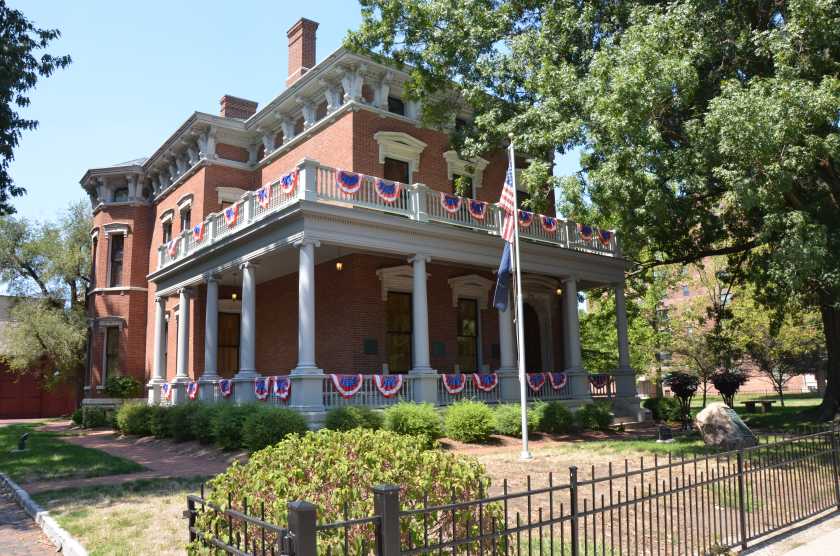
If you’re driving through Indianapolis on the way down to Columbus, consider stopping at President Benjamin Harrison’s home at 1230 Delaware Street.  It’s located in a neighborhood that feels like a small town.  The stately Italianate house is nicely furnished, and the tour is a chance to learn about this little-known president.


Eldon, Iowa

IMG_0960b

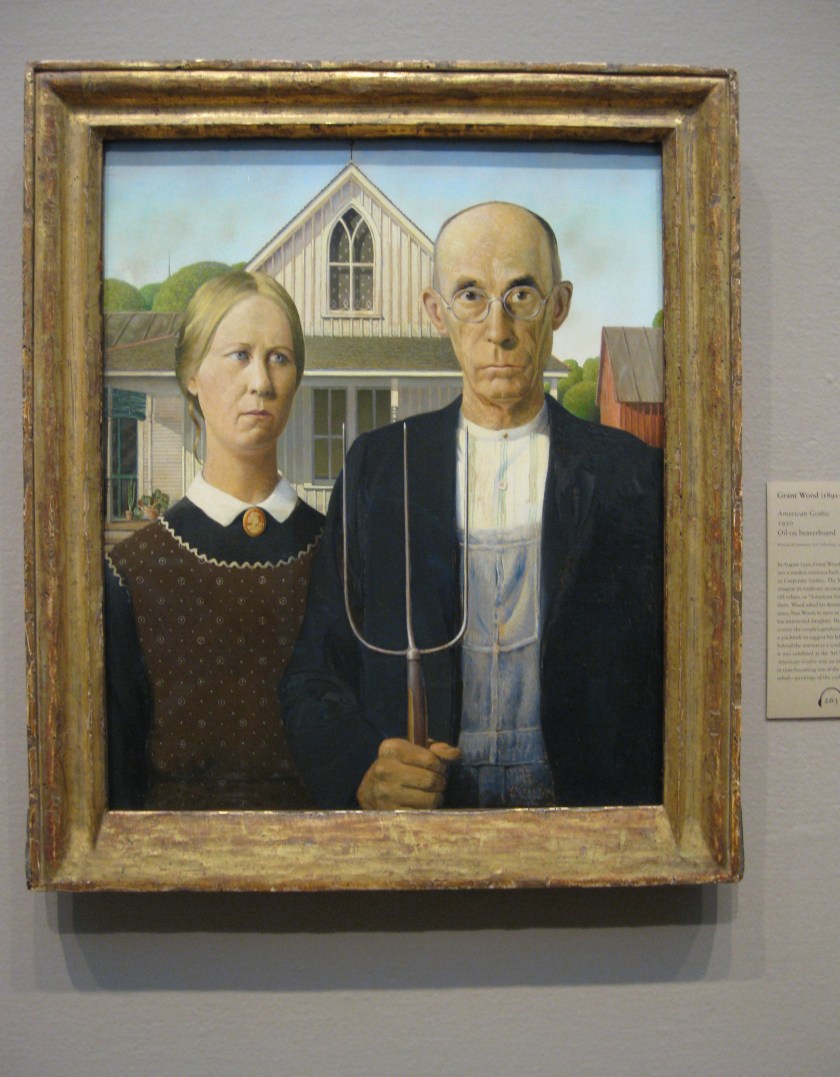
Most people will give you a blank look when you mention Eldon, Iowa, but show them a photo of “American Gothic,” and they immediately recognize the painting.  It’s one of the most familiar images in American art.

DSC_3892edit

Eldon, Iowa, in the southeast corner of the state, is where you will find the actual house that inspired the artist, Grant Wood.  The story goes that Wood was visiting Eldon in 1930 for an art exhibit, and he and a friend were taking a driving tour around town.  Wood noticed the little white house and sketched it on an envelope.  Later he painted the now famous “American Gothic” in his studio in Cedar Rapids.  Wood’s sister, Nan, and his dentist, Dr. Byron McKeeby, were the models for the woman and the man.

DSC_3920b

Today the American Gothic House Center is a state historic site.  A visit includes the opportunity to see the exterior of the house and grounds as well as tour the adjacent Center that opened in 2007.  There you can learn about Grant Wood and the history of the house.  There’s also a gift shop with a quality inventory of books and souvenir items.  Admission for everything is free, but donations are welcome.

DSC_3914b

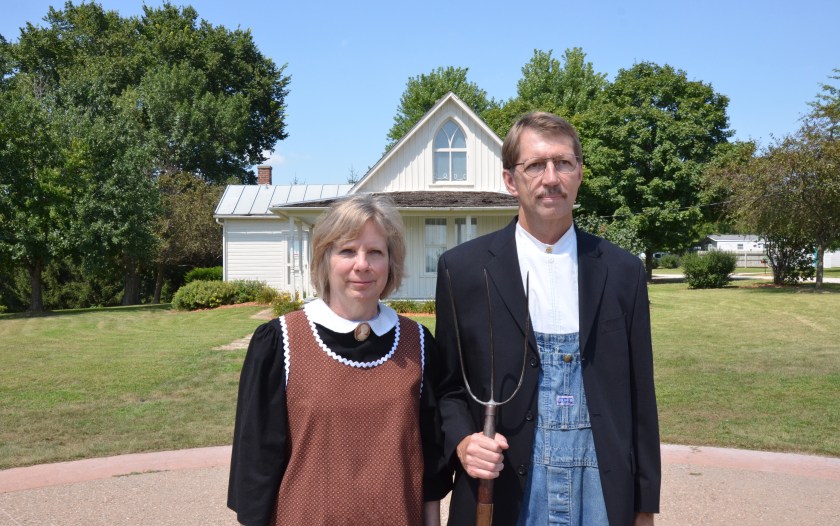
Don’t leave without creating your own American Gothic parody.  The Center provides clothes and props to dress up – then stop laughing at each other, go outside in front of the house, and strike a serious pose.  Employees can either snap a shot with your camera or use theirs and charge you a few dollars for a print.

DSC_3872

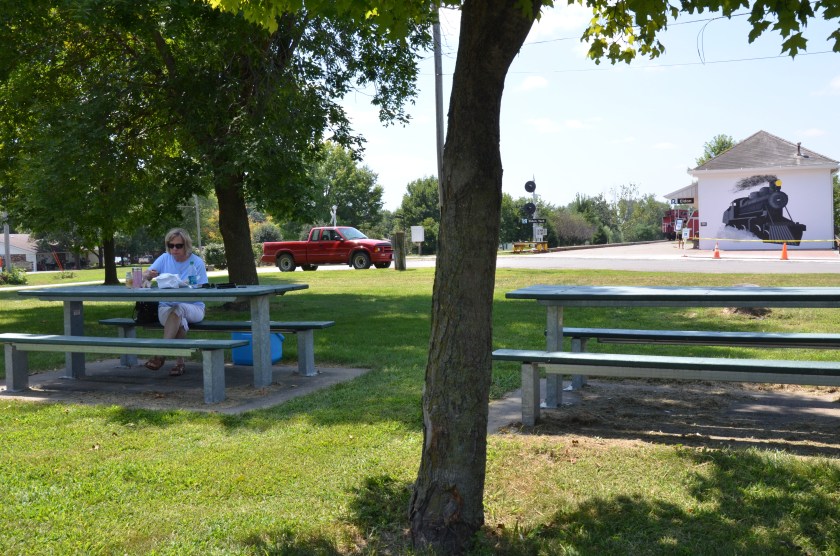
If it’s been awhile since you’ve enjoyed an old-fashioned roadside picnic, this would be a good time to have one.  Eldon is a small town, and dining options are limited.  On Main Street, you’ll find a community park with some nice shade trees and picnic tables next to the railroad tracks.

DSC_3875

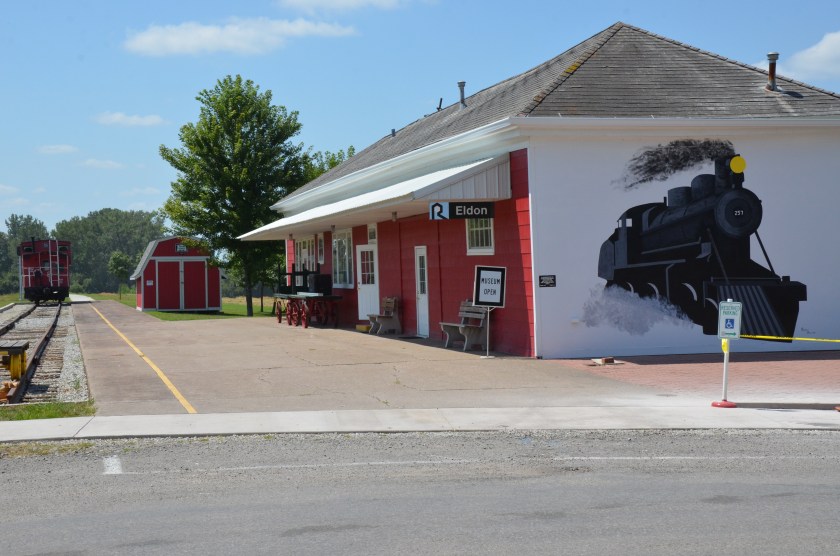
In addition to the picnic area, the former Rock Island depot sits on the edge of the park.  Today it’s a museum of railroad history.

The American Gothic House Center is the star attraction in Eldon, Iowa.  It’s an interesting and fun visit, and I can now check that off my list!

American Gothic House Center                                                                                                                300 American Gothic Street                                                                                                                 Eldon, Iowa


Metamora, Illinois

A trip to Springfield, Illinois is the ultimate Lincoln experience, but for an abbreviated version, travel to Metamora, just eleven miles east of Peoria.  It’s Lincoln lite, one of many opportunities to visit a central Illinois town that has a connection with our 16th President.

DSC_5811

Metamora features an 1845 court house where Lincoln practiced law on the Eighth Judicial Circuit.  Twice a year, Lincoln traveled from one county seat to another in a fourteen-county circuit.  Court was held in each community for about 3-5 days before moving on.  Lincoln and the other lawyers riding the circuit represented the local people in court.

This building is one of two original courthouses remaining from the Lincoln circuit days.  (The other courthouse is in Mt. Pulaski and dates from 1848.)

DSC_5827

The Metamora courthouse is a state historic site and nicely restored.  It’s a two-story building  – the downstairs features exhibits on local history and the early court system, including life on the Eighth Judicial Circuit.

DSC_5838

DSC_5833

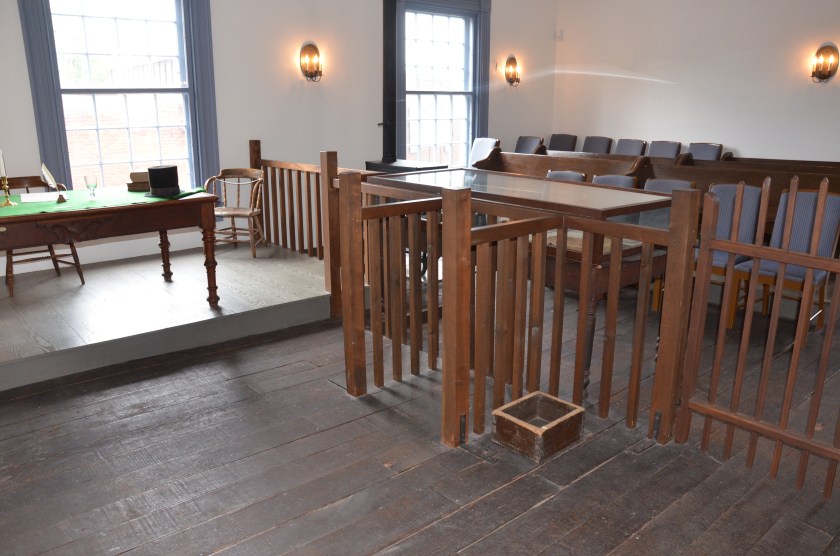
Upstairs, the courtroom has been restored to the era when Lincoln appeared there.  It’s a fascinating look at the court system back then, with the testifying witness standing in a box, facing the judge and jury. (The square on the floor is a tobacco spittoon.)

DSC_5835

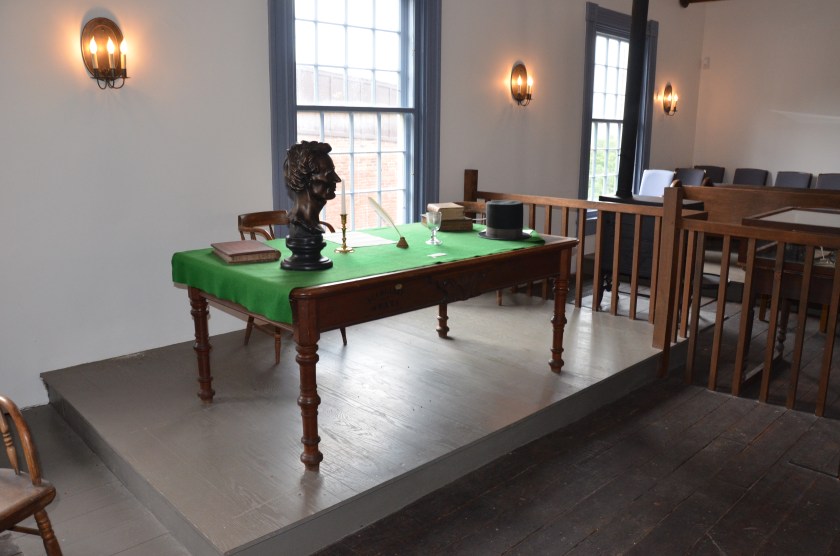
Among the original artifacts is the table used by Lincoln during the 1860 Presidential campaign.

DSC_5836

The trim board was notched out to accommodate Lincoln’s long legs.

DSC_5812B

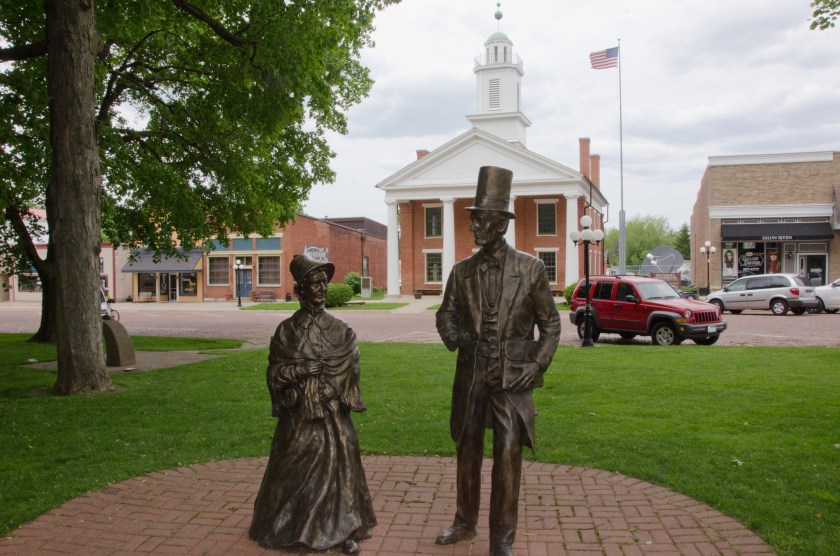
A guide tells you about one of Lincoln’s more well-known trials that took place in the courtroom.  On October 10, 1857, Lincoln attempted to defend Melissa Goings, a seventy-year-old woman accused of killing her abusive husband.  Most people felt sorry for her and didn’t want to see her prosecuted.  During a break in the proceedings, Mrs. Goings escaped.  A bailiff accused Lincoln of chasing her off, but according to local legend, Lincoln responded, “I did not run her off. She wanted to know where she could get a good drink of water, and I told her there was mighty good water in Tennessee.”  No one went looking for Mrs. Goings.  In the park across the street from the courthouse, there’s a statue of Lincoln and Melissa Goings.

DSC_5840

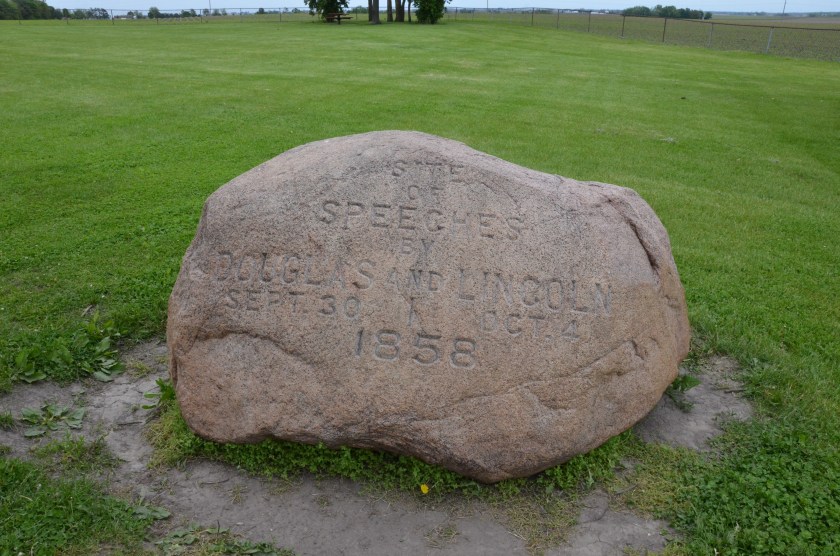
Lincoln and Douglas sort of had a debate in a nearby park, and a boulder commemorates that spot.  The two men couldn’t get their calendars lined up for an actual debate so they gave speeches on separate days in the fall of 1858.  Douglas spoke on September 30th, and Lincoln on October 4th.

DSC_5844B

We’ve memorialized Lincoln in a lot of different ways, and here’s an interesting one.  Take the Metamora-Washington blacktop about five miles out of town to see a Lincoln Circuit Marker.  Back in the early 1920s, members of the DAR, along with the Lincoln Circuit Marking Association, decided to place markers on the county lines of the Eighth Judicial Circuit.  A total of nineteen were placed, with fourteen remaining today.  Lincoln scholar Guy Fraker wrote that the markers resemble an eight-foot-tall chess piece.  That’s an apt description.

After a visit, I’d have to say that Metamora offers a satisfying little slice of Lincoln history.  You’ll enjoy it!

Anderson Japanese Gardens Rockford, Illinois

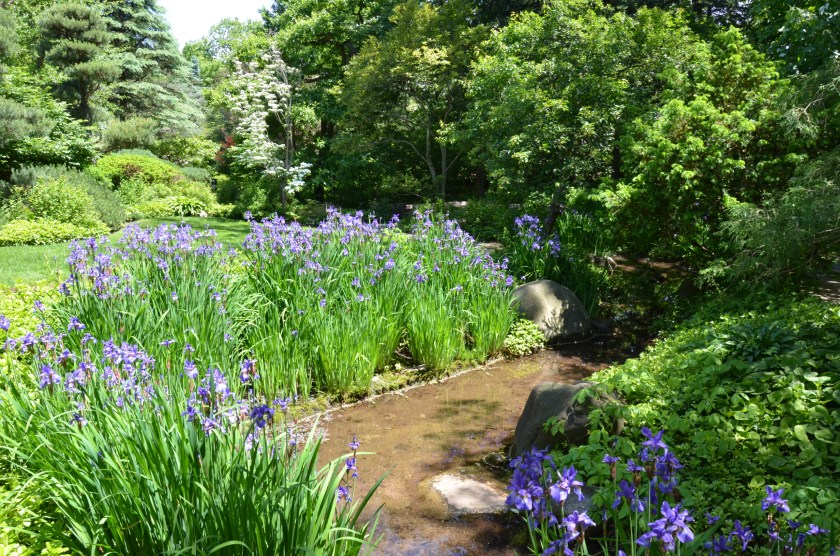
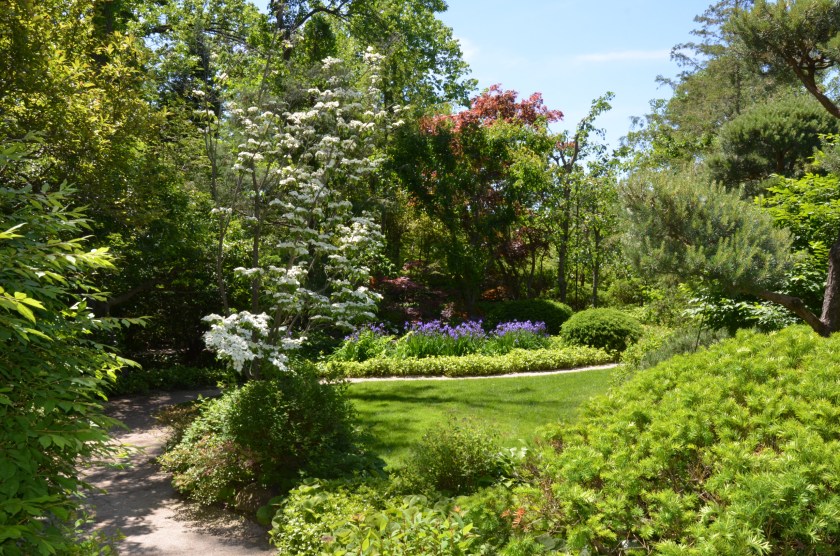
This is a particularly beautiful place to visit in the Spring and again in the Fall.  The grounds offer koi-filled ponds, garden paths winding through the foliage, and stunning waterfalls.

At times there isn’t a lot of flowering plants.  I learned that the concept of a Japanese garden includes a minimum of flowers, and what few there are represent the fleeting nature of life.  That’s why a Spring visit is so special – the iris, rhododendron, and azalea are that fleeting moment.

DSC_3340

This site all began with John R. Anderson, a Rockford businessman who had a long-time appreciation of Japanese culture.  After visiting the Portland Japanese Garden in Portland, Oregon, Mr. Anderson was inspired to have a garden of his own.  He went right to the top, and in 1978, hired renowned landscape designer, Hoichi Kurisu, to transform twelve swampy acres of his backyard into a Japanese garden.  The Andersons later donated their grounds to a non-profit organization.

DSC_3427.JPG

DSC_3363

DSC_3382

It’s a lovely, tranquil area to wander around.  Turtles, ducks, and lots of koi share the space with all the plants.  The day I was there, kids as well as adults were taking in the nature and thoroughly enjoying themselves.

DSC_3436b

The grounds include a traditional Tea House.  A scroll on the wall inside reads, “Every day is a good day.”

DSC_3445

One of my favorite areas was the West Waterfall. Here the three elements of a Japanese garden – stone, water, and plants  – offered a spectacular show.

The symbol for the Anderson Japanese Gardens translates to . . .  “At this moment I realize only contentment.” Plan a visit to the gardens, and feel that peaceful seclusion from the outside world.

Anderson Japanese Gardens

318 Spring Creek Road

Rockford, Illinois

andersongardens.org